
From Convenience to Safety: Car Accessories are Growing Up
Car accessories are evolving from optional extras into integrated electronics that support safety, sensing and connectivity. For India’s aftermarket, the opportunity lies in bringing dependable technology to existing vehicles through responsible engineering and integration.
By Pavan Puri, founder, Greencore Electronics Pvt. Ltd.
There was a time when car accessories meant exactly that: extras. A reverse camera, a mobile charger, perhaps a better infotainment screen. Nice to have, but not essential. That distinction is becoming harder to sustain. As vehicles become more electronic and connected, several technologies that once sat in the accessories category are increasingly being viewed through the lens of safety.
But there is an important distinction to make. In India, some of these features are no longer an emerging trend at all; they are already part of the regulatory baseline. The more interesting question is what happens next, especially for the millions of vehicles already registered before newer safety technologies became standard.
Safety features have already crossed the regulatory line
India's regulatory framework has already moved beyond treating basic safety electronics as optional add-ons. MoRTH notification G.S.R. 1483(E), dated 7 December 2017, amended the Central Motor Vehicles Rules to require, for M1 vehicles manufactured on or after 1 July 2019, features including a seat-belt reminder, manual override and a speed alert system. The same notification also required a vehicle reverse-gear sensor, with its requirements linked to AIS-145:2017. MoRTH has separately stated that goods vehicles manufactured on or after 1 April 2020, except puller tractors for trailers, are required to have a reverse-parking alert system complying with AIS-145:2017.
That changes the way we should describe parking sensors and reverse alerts. They are not simply accessories that consumers are newly discovering as safety products; the regulatory system has already recognised their safety value. The shift for the aftermarket is therefore less about making the first generation of safety electronics acceptable and more about making the next generation accessible, reliable and properly integrated.
The next regulatory wave: commercial vehicles
The live regulatory action is now around advanced driver-assistance systems, but it is important to get the scope right. The government notified the Central Motor Vehicles (Sixth Amendment) Rules, 2025 through G.S.R. 834(E) on 11 November 2025. The notification was subsequently corrected through G.S.R. 862(E), dated 21 November 2025.
The corrected AEBS provision covers M2, M3, N2 and N3 vehicles, broadly, buses and medium/heavy commercial vehicles, rather than M1 passenger cars. The notified requirements include Advanced Emergency Braking Systems under AIS-162, Lane Departure Warning Systems under AIS-188, Driver Drowsiness Detection and Alert Systems under AIS-184, Blind Spot Information Systems under AIS-186 and Moving Off Information Systems under AIS-187. Under the corrigendum, AEBS is required for new models manufactured on or after 1 January 2027 and all models manufactured on or after 1 October 2027 in the specified categories. MoRTH's February 2026 PIB release states that the other four listed systems become mandatory from 1 January 2028.
The regulatory push for advanced safety technology in specified commercial-vehicle categories is significant. These provisions do not establish an equivalent ADAS fitment requirement for M1 passenger cars. For the passenger-car ecosystem, that leaves a substantial opportunity, and responsibility, for manufacturers, suppliers and the aftermarket to improve what existing vehicles can offer without pretending that an aftermarket system is identical to an OEM-integrated one.
The aftermarket is already a serious automotive ecosystem
The scale of the aftermarket makes this discussion more than a technology story. According to the Automotive Component Manufacturers Association of India (ACMA), India's auto-component industry recorded turnover of INR 6.73 lakh crore in FY2024-25, while the domestic aftermarket was estimated at INR 99,948 crore, growing 6 per cent during the year. That gives the aftermarket a significant economic base from which higher-value electronics and safety technologies can develop.
There is also a much larger installed base to think about. VAHAN's public dashboard provides year-wise registration data and allows registrations to be examined by period and vehicle category. It is important, however, not to equate cumulative registrations with the number of vehicles currently on the road. De-registration, scrappage and coverage limitations mean the dashboard is better used to establish the scale and age of the registered vehicle population than to claim a precise live fleet.
That distinction matters because the opportunity is not simply to sell another device. It is to bring useful technology to vehicles that were designed before today's expectations around visibility, connectivity and driver assistance became mainstream.
Accessories are becoming systems
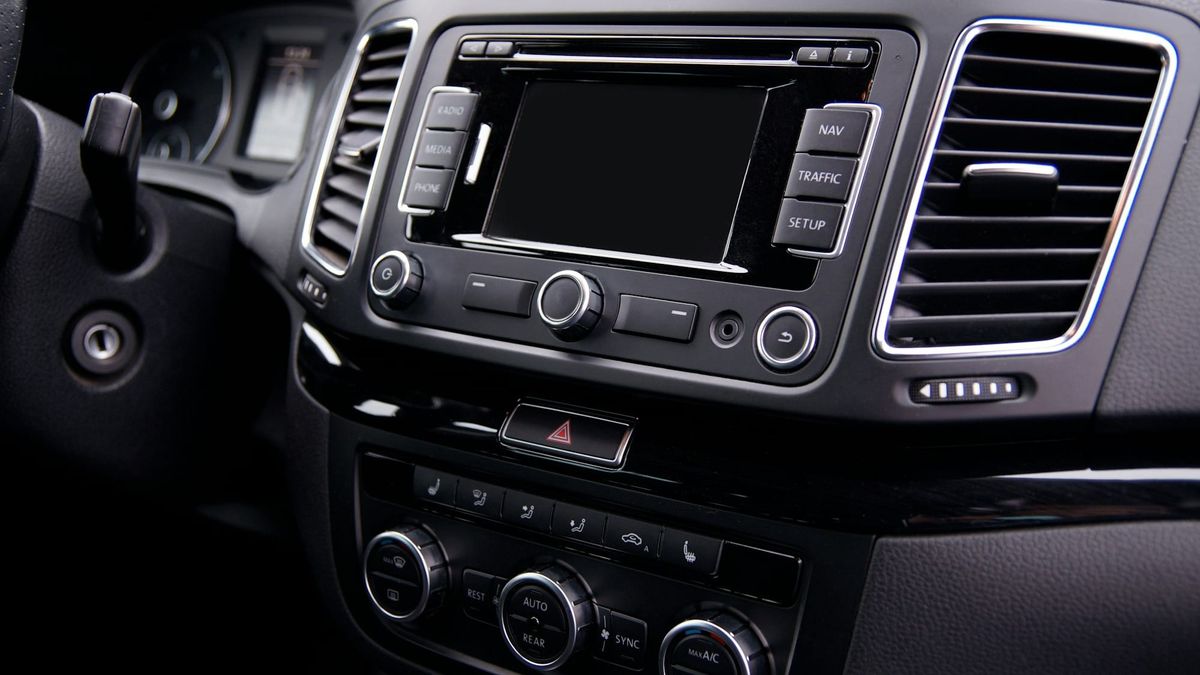
This is where the industry is changing fastest. A reverse camera is no longer necessarily just a camera. Combined with a display, parking sensors, processing and appropriate alerts, it becomes part of a broader driver-support system. Infotainment has made a similar transition: from a unit that plays music to a connected interface handling navigation, calls, vehicle information and other functions.
Greencore Electronics is a useful example of this transition, with capabilities spanning reverse cameras, parking assistance and infotainment, alongside work in areas such as ADAS, radar, ultrasonic sensing and LiDAR. The direction is clear: automotive electronics companies are increasingly being asked to connect sensing, processing and user interfaces rather than simply supply individual components.
The aftermarket must meet an OEM-level standard of responsibility
The more an accessory influences safety, the less acceptable it becomes to treat it as a low-cost gadget. These products operate in India's heat, dust, vibration and monsoon conditions. Installation quality, calibration, electromagnetic compatibility, durability and system integration all matter.
There is also a communication responsibility. An aftermarket parking system can improve awareness, but it should not be marketed as a substitute for a vehicle's engineered crash-safety systems. Likewise, an ADAS-like feature should not create a false impression that a vehicle has the same level of integration, validation or redundancy as a factory-fitted system.
EVs will accelerate the shift
Electric vehicles will push this transition further. With more electronics, sensors, software and connectivity embedded in the vehicle, the boundary between mechanical hardware and electronic intelligence will continue to move. Charging interfaces, connectivity, sensing, driver assistance and vehicle displays will increasingly be treated as parts of one digital architecture.
For suppliers, this means moving beyond the idea of an accessories catalogue. The opportunity lies in developing dependable automotive-grade electronics that can communicate with the vehicle and driver while meeting the environmental and reliability demands of Indian roads.
The real opportunity is integration
The next phase of the accessories market will not be defined by how many individual gadgets can be added to a dashboard. It will be defined by how effectively cameras, sensors, displays, connectivity and driver-support functions work together.
For India's large registered vehicle base, that integration has a practical value. New-car technology will continue to advance through OEM platforms and regulation. At the same time, the aftermarket can help extend selected safety and convenience capabilities to older vehicles, provided the technology is engineered responsibly and its limitations are clearly understood.
At the end of the day, the evolution of car accessories mirrors the evolution of the automobile itself. The category is moving from convenience toward capability, and from individual gadgets toward integrated automotive electronics. The important shift is not that every accessory is suddenly a safety system. It is that safety, sensing and connectivity are becoming central to what consumers expect from automotive technology.
For India, getting this transition right could deliver three gains at once: better access to useful vehicle technology, a stronger and more organised aftermarket, and greater domestic capability in automotive electronics manufacturing. The next generation of car accessories will not simply make driving more comfortable. Done responsibly, they can make existing vehicles smarter, more capable and safer.

Pavan Puri, founder and managing director, Greencore Electronics Pvt. Ltd.
Greencore Electronics manufactures automotive electronics for the Indian market, including reverse camera systems, ultrasonic sensors, parking assistance and infotainment units, supplied through distributors for two-wheelers, passenger vehicles, trucks and construction vehicles. Puri founded Greencore after studying engineering and earning an MBA in the US.
Greencore sells products in the category discussed in this article.


