Pharma leaders flag API import dependence and thin R&D spend at CPHI build-up
The Hyderabad briefing ahead of CPHI & PMEC India 2026 talked about the industry's dependence on external inputs, the need for deeper investment in R&D and the growing pressure to meet evolving compliance standards, besides logistics of the events.
Following up on previous note
Beyond the logistics of a show split across two venues, the Hyderabad media briefing held ahead of CPHI & PMEC India 2026 turned into a fairly candid stocktake of Indian pharma's unfinished business, with backward integration, research spending and compliance readiness dominating the discussion.
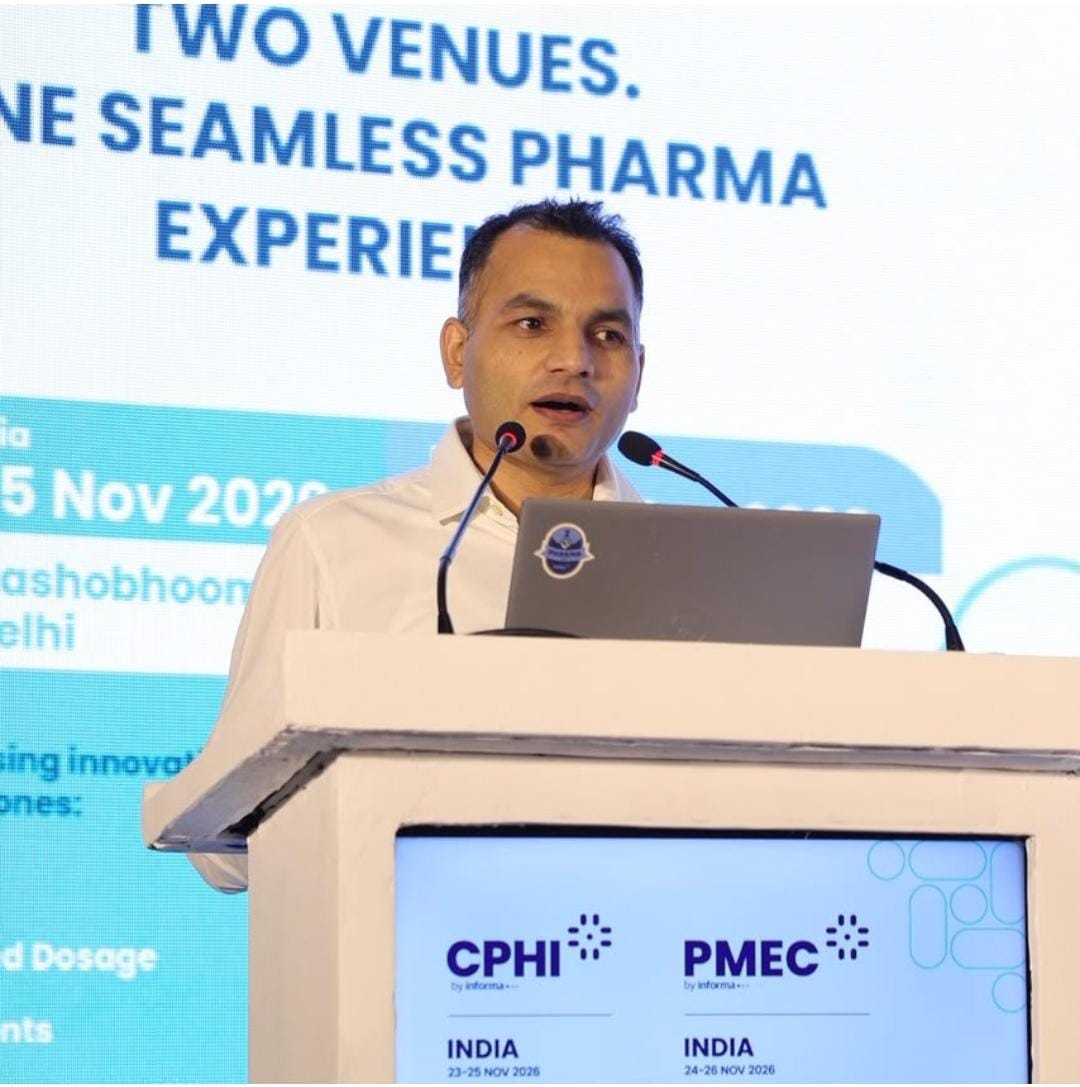
Sarvesh Singh, ceo, Lifesciences & Pharma, Government of Telangana
"Telangana used the platform to argue that its next phase will not be defined by output volume. Telangana has already established itself as India's pharmaceutical manufacturing powerhouse and a global vaccine hub, but our ambition now goes beyond manufacturing. We want Telangana to emerge as the life sciences innovation capital of India."
Singh said the state's focus was on moving up the value chain from generics and APIs towards biologics, biosimilars, and cell and gene therapies, supported by more than 20 dedicated life sciences incubators backing over 1,000 startups. He also pointed to a Green Skills Centre of Excellence set up with Microsoft and 1M1B, and to partnerships being built across the US, Europe, Japan, South Korea and China. Telangana's Next-Gen Life Sciences Policy 2026-30, reported earlier, targets USD 25 billion in investment and five lakh jobs.
The sharper points came from the manufacturing side. M. Roja Rani, executive director of the Bulk Drug Manufacturers Association of India, said bulk drugs and APIs account for close to 40 per cent of the Indian pharmaceutical industry, or roughly INR 40,000 to 50,000 crore, with exports growing at about 11 per cent on US and European demand. The ability to manufacture, she said, is no longer the constraint; the priority now is competitiveness and cutting dependence on imported key starting materials and intermediates. She said the PLI scheme and bulk drug parks were useful enablers but called for faster implementation, better access to infrastructure and stronger support for MSME manufacturers.
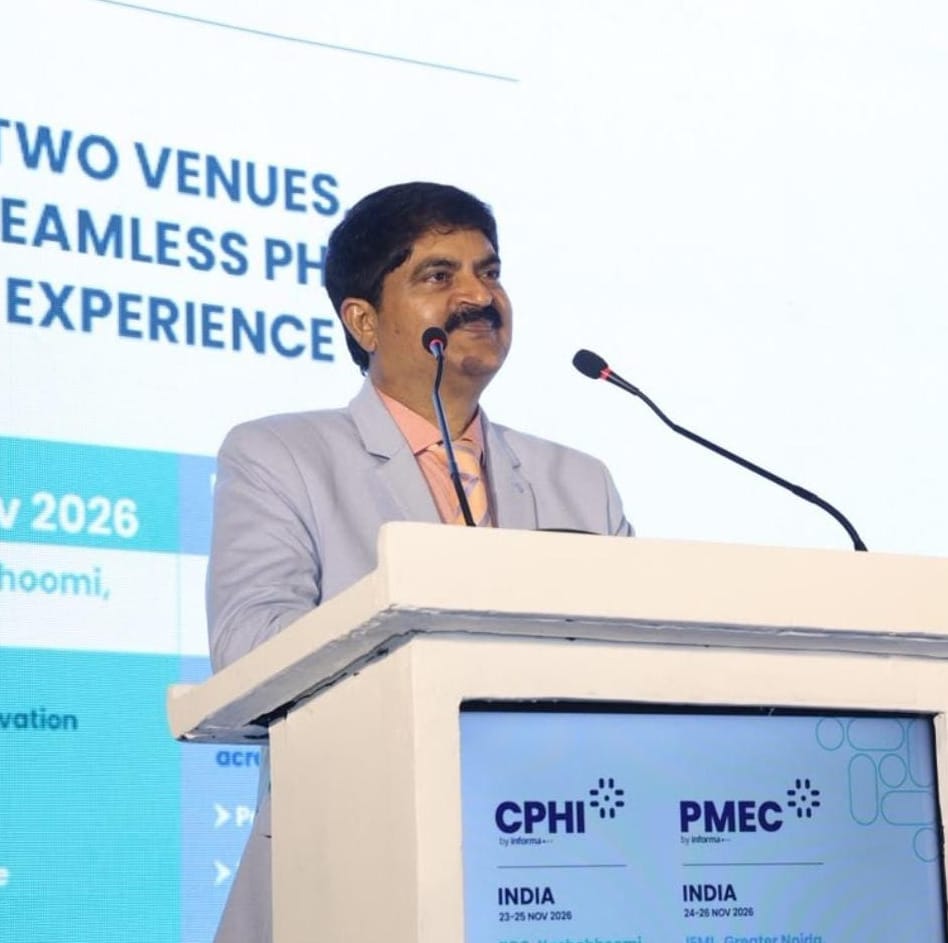
Chakravarthi AVPS, chairman, Federation of Pharma Entrepreneurs, Telangana and Andhra Pradesh
"If India is to scale from where we are today to a USD 130 billion global pharmaceutical powerhouse, we must lead not only in affordability, but also in sustainable technology, complex delivery systems and global regulatory excellence. India's pharmaceutical strength has always been defined by its ability to make quality healthcare accessible and affordable across the world, the next phase goes beyond cost competitiveness."
Pushpa Vijayaraghavan, director of healthcare and life sciences advisory at Sathguru Management Consultants, put the industry at USD 50 to 60 billion today and said reaching USD 300 billion would require simultaneous progress on several fronts: protecting the generics base, moving faster on API backward integration, building scale in biologics and biosimilars, and investing considerably more in innovation, where she sized the global opportunity at around USD 500 billion. The government's INR 1 lakh crore RDI fund could de-risk part of that shift, she said, but industry would still need greater risk appetite and longer-term commitment. She also flagged greener API manufacturing, energy and packaging as competitiveness issues rather than optional ones.
Informa Markets framed the November editions as a forum for those conversations. "India is entering a defining decade for pharmaceuticals, with its strengths in science, talent and manufacturing increasingly translating into higher-value opportunities across research, development and contract services," said Yogesh Mudras, managing director, Informa Markets in India. "Realising this potential will depend on how effectively the industry advances quality, technology, capability and global collaboration."
The backdrop is an official target of USD 50 billion in pharmaceutical exports by 2030, against a sector projected at roughly USD 130 billion by the same year.
CPHI India runs from 23 to 25 November at IICC Yashobhoomi, Dwarka, and PMEC India from 24 to 26 November at IEML, Greater Noida. Alongside the exhibition floor, the 19th edition will carry Leaders Round Tables, curated networking sessions, a Women in Pharma programme, focused exhibition zones and live technology showcases.