Bengaluru start-up is designing a home-grown cruise-missile engine
Paninian India, a Bengaluru start-up, has shown off a compact turbofan design intended for a home-grown long-range cruise missile. Private firms rarely enter strategic engine work in India, where the field has stayed mostly with government labs.
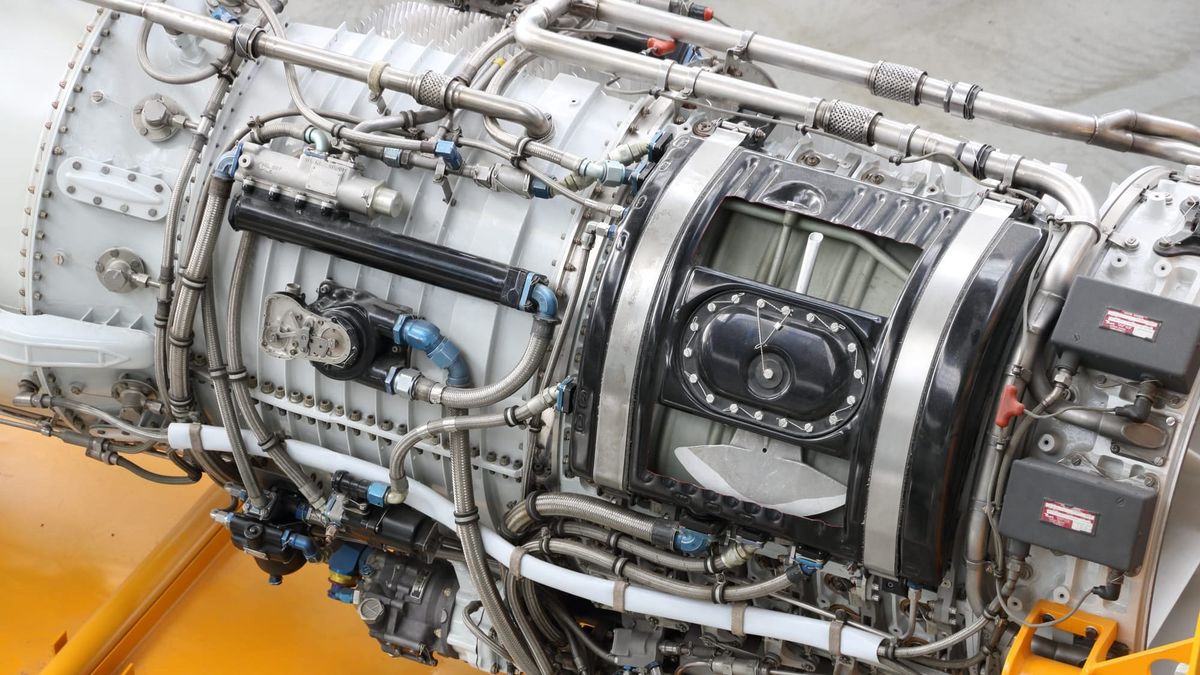
A Bengaluru start-up, Paninian India, has unveiled the design of a small turbofan engine meant to power an indigenous long-range cruise missile; a rare private-sector move into strategic aerospace propulsion, a field India has long left almost entirely to state laboratories.
Building a jet engine is one of the hardest problems in aerospace, and India has struggled to field one of its own even inside its government programmes. A private company attempting a military-grade turbofan is therefore a real test of whether the country's young defence-tech sector can take on work that has sat with the state for decades.
Paninian said its Yantur engine, rated at 4.5 kilonewtons of thrust, has completed its design phase and is moving into subsystem testing and certification. It described the engine as what it believes is India's first privately developed turbofan in its class, and said it is meant to power Svayatt L1, a long-range cruise missile, while, the state's DRDO already makes one, the Manik, for the same missile. The company is building for the Defence Ministry's Make-I programme for a Long-Range Land Attack Cruise Missile.
This is a design milestone and a funding pitch, not a finished engine. Paninian said the programme has cleared its conceptual and detailed design stage and is now seeking money to build and test hardware. The company said the same engine core could later be scaled to 12.5 kN to power another platform, the Svayatt CCAV.
Paninian is founded in 2018 and led by founder Raghu Adla and Sandeep Moturi, is run with team of experienced engineers from DRDO, Rolls Royce and GE. To cement the technical credibility, Dr G. Gouda, a former group director for propulsion at CEMILAC, the military airworthiness certifier, said, "The programme complements the pioneering efforts of DRDO scientists, whose work has laid a strong foundation for indigenous propulsion development."
India's flagship indigenous jet-engine effort, the Kaveri programme, has faced decades of delays due to technological shortfalls, geopolitical sanctions, and reliance on foreign facilities signifying how developing a reliable military turbofan remains one of the most technologically demanding challeges in defence engineering.
"Yantur represents a pioneering private-sector effort to build sovereign Indian propulsion capability," said founder Raghu Adla, adding that Paninian is seeking support from government, industry and investors to fund testing and validation.
Paninian said it is expected to raise USD 3 million to fund engine testing, subsystem qualification and integration with the missile platform. Whether the design becomes a working, certified engine: the point at which the claim of a private-sector first would really be tested, depends on that next, harder phase.