
HPCL to host Energy In Motion's truck battery-swap and charging hubs
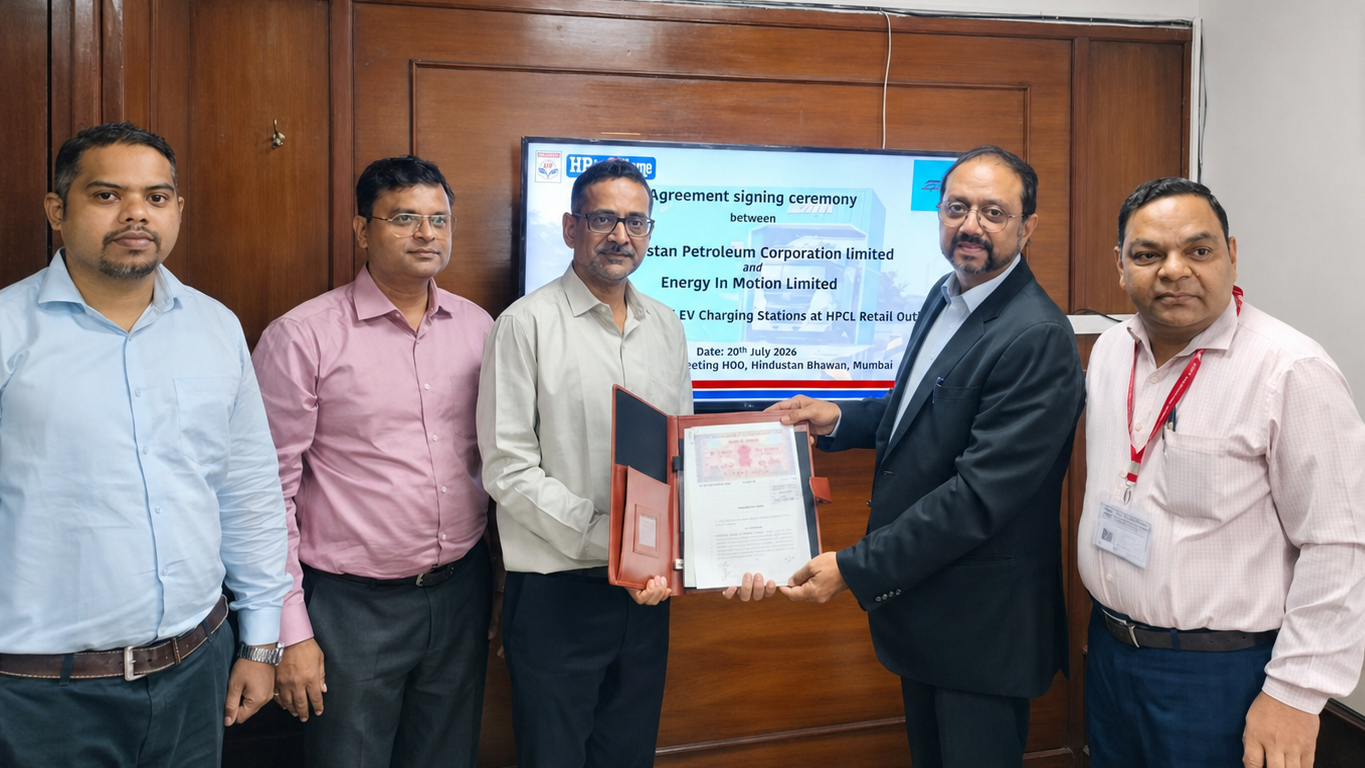
Energy In Motion, the electric-truck arm of listed Ravindra Energy, has signed an agreement with state-run HPCL to set up battery-swapping and fast-charging hubs for electric heavy commercial vehicles
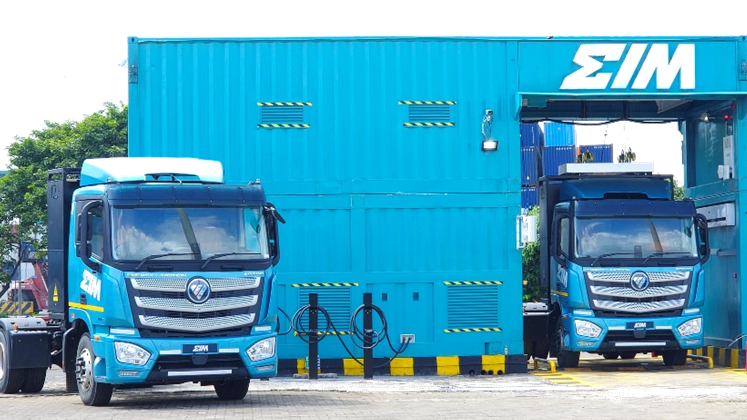
Energy In Motion, the electric-truck arm of listed Ravindra Energy, has signed an agreement with state-run HPCL to set up battery-swapping and fast-charging hubs for electric heavy commercial vehicles at the fuel retailer's outlets, starting on major freight corridors.
The deal puts charging and swapping where long-haul drivers already stop, at a marketer that the company says runs more than 25,000 outlets, and is a concrete step in the slow, hard business of electrifying Indian freight, the segment where charging reliability and route confidence matter most. It is also another EV push by a state oil company facing the long shift away from diesel.
Under the agreement, EIM will own and run the batteries and swap-charge hardware while HPCL provides the outlet space, power and amenities; the companies plan hubs on the Mumbai-Pune, Delhi-Jaipur and Chennai-Bangalore corridors over the next 18 to 24 months, EIM said. The company sells 'bare' electric trucks without batteries and offers energy as a service; it says it runs six heavy-duty swap stations in Delhi-NCR and at JNPA, handling about 840 swaps a day, and is targeting 40 stations by March 2027. Its first vehicle, the Ashwa 55-ton e-tractor, launched in August 2025, and it puts a battery swap at about seven minutes.
EIM is an associate of Ravindra Energy Limited (NSE: RELTD, BSE: 504341), which holds about 49.5% and recently put in roughly INR 150 crore. EIM has also signed a 500 MWh cell-supply deal with CATL and an MoU with leasing platform Drivn for 1,000 e-trucks.
The timing sits inside a wider shift. In the same window, three enterprise shippers moved freight onto cleaner trucks — JK Cement and Wonder Cement both electrifying 55-tonne haulage, Euler Motors expanding a last-mile fleet with Green Drive, and Dabur contracting Essar's GreenLine for LNG trucks. Each runs into the constraint this agreement targets. RMI estimates only about 5% of India's chargers can deliver the power a heavy truck needs, and reckons electricity alone accounts for 30 to 50% of an electric truck's ownership cost over seven years. Selling trucks without batteries and swapping them on a fuel retailer's forecourt is a bet that the binding constraint on freight electrification is not the price of the vehicle but somewhere dependable to plug it in.
The scale that decides how much this matters, how many outlets in phase one and how much each side is investing, has not been disclosed.
Updated 31 July 2026 to link to feature story