Samsung's Fold8 won the launch. What about winning India?
Will Samsung Galaxy Z Fold8 win India in sales?
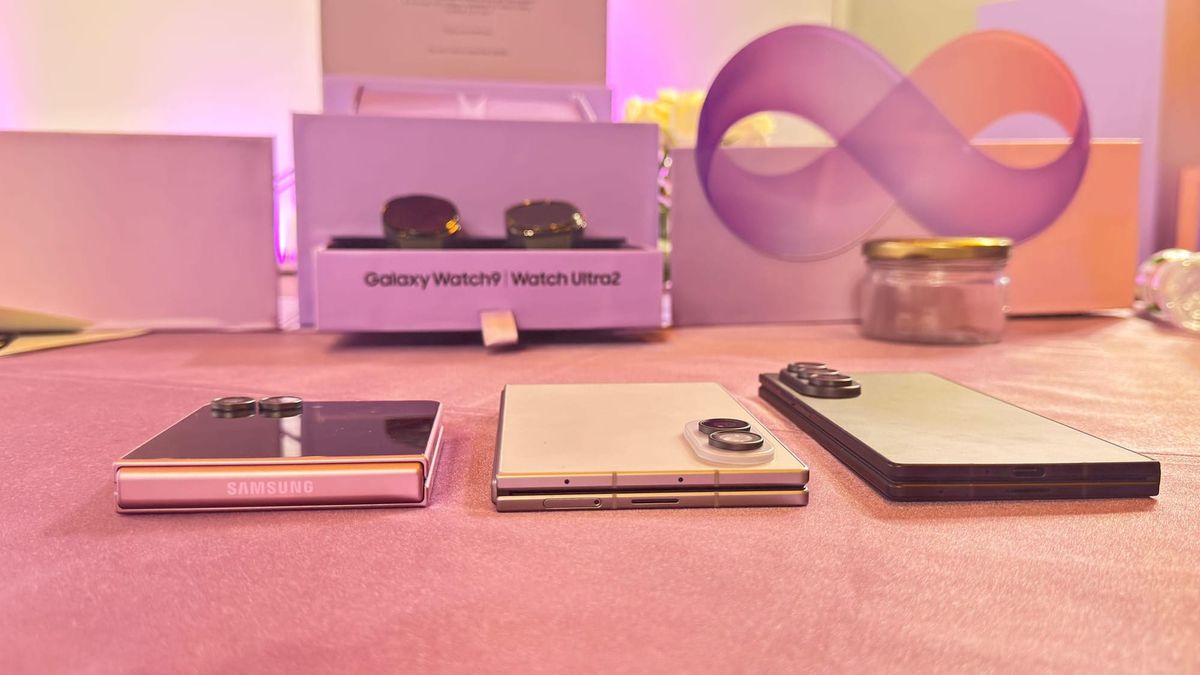
The redesigned Galaxy Z Fold8 was widely appreciated at the launch. Whether that adoration turns into sales will be decided by the price, payment method, and Apple.
At its India launch, ‘Galaxy Unpacked’ in Delhi this week, Samsung unveiled three new foldables, and the early standout wasn't the INR 1.99-lakh Ultra (base price). It was the lesser-priced, humbler Galaxy Z Fold8. I came in sceptical, and with reason: foldables have never escaped niche status since Samsung's first in 2019, and even now make up under 2% of the phones sold worldwide. Then I picked one up. The crease has all but disappeared, the flattest fold line I have seen on a Samsung foldable. But it is not a normal phone: it is awkward to hold and navigate one-handed, which is how most of us use a phone all day. What won me over was the form factor itself, and the multi-faceted, three-things-at-once uses an ordinary slab cannot manage. Rough edges and all, it is the most convincing case Samsung has yet made for the shape.
But a launch is not a ledger. The Fold8 has clearly won the applause; the harder question, the one that matters to Samsung's business and to anyone reading the Indian market, is whether applause converts into sales. Foldables are still a rounding error in global phone volumes; the redesign that drew the praise is less original than it looks; and in India the fate of an INR 1.8-lakh phone turns less on how good it feels in the hand than on three things the launch skated past: the price, the way Indians actually pay for it, and the rival about to gatecrash the category. But start with the phone, because the enthusiasm isn't unearned.
The phone itself
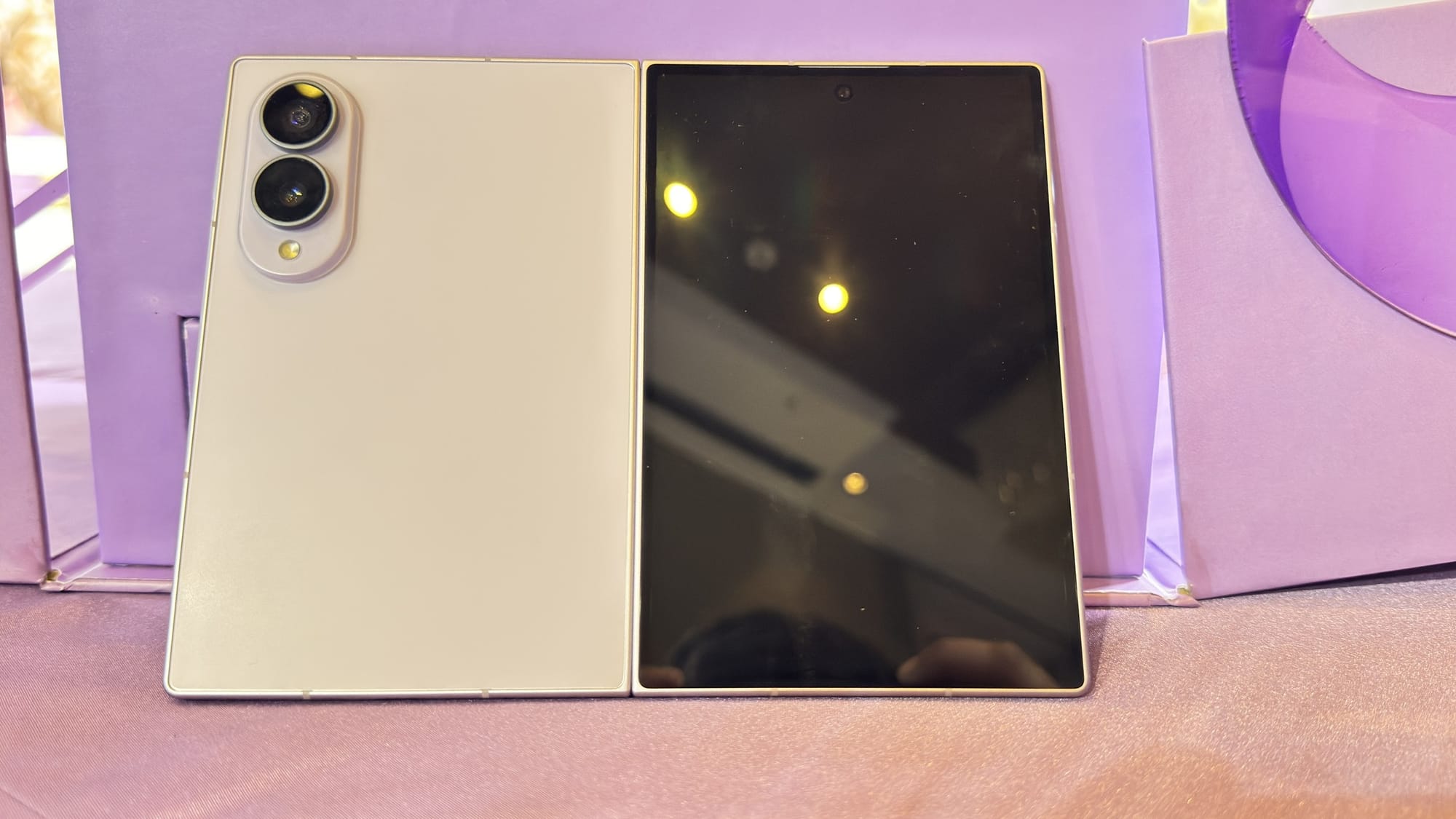
The standard Galaxy Z Fold8, priced from INR 1,79,999, is built around one deceptively simple idea: a screen that changes shape to fit the task. Folded, its 5.5-inch cover screen is an ordinary phone in a familiar 10:16 shape, for messaging, browsing and reels. Unfold it, and the 7.6-inch main display opens into a squarish 4:3 panel that turns landscape for films and games with far less wasted space; rotate that same panel, and it becomes a portrait shaped like a paperback, sized for articles and e-books. At 201g, it is the lightest Fold Samsung has ever made, lighter than several ordinary flagships on shelves today, yet it still packs a 4,800mAh battery and a display that peaks at 3,000 nits with an anti-reflective finish for reading outdoors. Underpinning it all is the upgrade that drew the most attention: Flex Titanium, a laser-etched titanium hinge-and-plate structure that flattens the crease and stiffens the panel.
That combination (lighter, wider, tougher, easier to hold) is precisely why the Fold8, not the spec-laden Ultra, drew the warmest reactions. The Fold8 Ultra chases power users with an 8-inch display, a 200-megapixel camera and 8K video; the Galaxy Z Flip8, the clamshell and Samsung's slimmest yet, courts the style-conscious; and two new smartwatches, the Galaxy Watch9 and Galaxy Watch Ultra2, extend Galaxy AI to the wrist. But the standard Fold8 chases something more valuable: normalcy. Its one concession to the tier above is the camera, a dual 50-megapixel system rather than the Ultra's 200, but that is the point. This is Samsung's attempt to make a foldable feel less like an engineering showcase and more like the phone you would simply reach for. If foldables are ever going mainstream, this is the kind of device that has to carry them there.
But is it really the hero?
The case for restraint is just as strong. For all the warmth, the Fold8's headline idea is not Samsung's own. Oppo pioneered the shorter, wider "passport" shape back in 2021 with the original Find N (the first foldable to open straight into a landscape, near-square inner screen), and refined it with the Find N2 the following year. Google followed in 2023 with its first Pixel Fold, a device it had internally codenamed "Passport"; the market shrugged, and Google abandoned the shape for a taller successor. Samsung, whose Folds stayed tall and narrow for seven generations, has arrived at the idea last, if with better materials and a flatter crease. More sobering for anyone counting units: foldables remain a niche. The entire world buys only around 3.4 million of them a quarter, against some 300 million smartphones, and globally the segment even shrank slightly over the past year. A rapturous launch has never been this category's problem. Conversion has. Samsung has won plenty of these mornings before.
The harder question: will it sell?
Which is where India comes in, and where the interesting business questions live. India matters to Samsung's foldable ambitions out of all proportion to its size, because it is the company's fortress: Samsung took an extraordinary 88% of India's foldable volume last year, even as it sits second worldwide behind a Huawei that barely sells outside China. If the mainstreaming bet works anywhere, it should work here.
The obstacle is the sticker. The Fold8 starts at INR 1,79,999 and runs to INR 2,39,999; the Ultra tops out near INR 2.6 lakh, and the Flip8 opens the range at INR 1,24,999. Pre-orders opened at the launch on 22 July, with deliveries from 4 August and open sales on 8 August. The prices are steep in any market, and they are climbing: the Galaxy Z Fold5 launched in India at INR 1,54,999 just three years ago. In a country where the average smartphone sells for a fraction of that, a phone priced like a used car should be a hard sell. It isn't, and the reason is credit.
Counterpoint Research reckons roughly 44% of all smartphones bought in India now involve some affordability scheme, and at the premium end, financing is not a convenience but the mechanism. Samsung understands this better than anyone: it leads India's EMI-driven phone sales through its own lending arm, Samsung Finance+. The Fold8's launch offers show the playbook: up to 30 months of no-cost EMI with zero down payment, an upgrade bonus of INR 10,000, and, most tellingly, a "Galaxy Forever" plan that bundles insurance with an assured buyback of up to 55% and lets you swap the phone for the next one, all for INR 1,084 a month. Strip away the language, and that is not a purchase at all; it is a subscription to a device.
To Samsung's credit, this isn't simply a tale of financed imports. At the launch, India chief JB Park stressed that the foldables are made in India and draw on local R&D. By his account, the Fold8, at around INR 2 lakh, is not simply imported luxury, however it is financed: it is assembled in India and shaped in part by Indian engineers at research centres that have filed thousands of patents from the country. If that holds, the premium a buyer pays feeds a genuine manufacturing and export operation, not an import-and-sell one: Samsung's India business makes things, rather than merely merchandising them. Financing, in fairness, is how aspirational India legitimately reaches products it could never buy outright, and that 88% share suggests the model works. But it also means demand at this end of the market is being pulled forward on instalments, which makes "will it sell?" partly a question about credit appetite, not just desire.
There is a second thing the Fold8 buyer is paying for, and it isn't entirely Samsung's. The loudest part of this launch was AI: Gemini woven through the phone, "agentic" features that book a restaurant or summarise a meeting across 49 apps, six months of Google's premium AI tier thrown in. Increasingly, a top-end Galaxy is a showcase for Google's intelligence as much as Samsung's hardware, a dependence that is convenient today and strategically awkward tomorrow, given Google also makes competing Pixel phones. For now it sweetens the deal. It is worth watching who it ultimately serves.
And then there is the clock. Apple is expected to launch its first foldable in September, and it will do so before an audience Samsung has just spent a launch educating about what a mature foldable looks like. That cuts both ways. Apple's entry will validate the category Samsung built, but it will also land squarely in the premium tier where Apple is already surging in India, having taken a record share (about 28%) of the market's value last year. Samsung's answer is to entrench now, with better hardware, aggressive financing and a captive 88%, before the most dangerous competitor it has walks in.
The verdict
So, is the Fold8 the hero Samsung says it is? On launch day, yes: it is very likely the best foldable the company has made, and the warm reception was earned. But heroism at a launch and heroism on a sales chart are different tests, and in India the second one will be settled not by how the phone feels in the hand but by the price, the EMI tenure, and how buyers feel once Apple's version is sitting in the next display case. The applause has been banked. The scoreboard that matters, the sales report two quarters from now, is still blank.
Applause is cheap. Sales are the test.
Six figures behind Samsung's foldable launch, from the price ladder to the niche it's fighting to grow.
The lineup
A deliberate ladder of price points
Starting prices (12/256GB); top variants reach INR 2.6L. Source: Samsung India, 22 Jul 2026
Priced to climb
What a base Fold costs in India
Up ≈ INR 25,000 (+16%) in three years, even as Samsung pushes foldables toward the mainstream.
Launch starting prices. Source: Samsung India
A niche, not a mass market
Foldables are a sliver of all phones sold
Foldables are roughly 1% of the global smartphone market, and the segment shrank slightly over the past year.
Global shipments/quarter. Source: Smart Analytics Global; industry estimates
World #2, home #1
Samsung's foldable share: global vs India
Global: Smart Analytics Global (Q2 2026). India: Counterpoint Research (2025)
How India buys premium
The INR 2-lakh phone runs on credit
of India's smartphone sales in 2026 are now bought on financing (an NBFC loan or card EMI), up from 35% a year earlier.
And ≈67% of those financed purchases are backed by NBFCs, vital in smaller cities where credit cards are scarce.
Source: Counterpoint Research
The premiumisation gap
India's phone market: flat in units, richer in value
1 in 5 phones sold is now premium (INR 30k+), and Apple alone took ~28% of the market's value.
India, full-year 2025. Source: Counterpoint Research
Amounts in INR (Indian rupees); L = lakh.